Off of Which Continent Can You Find the Great Barrier Reef?
11 Astonishing Facts Virtually The Smashing Barrier Reef!
One of the 7 natural wonders of the world, the Swell Barrier Reef is located off the coast of Australia'due south Queensland and is home to a vast array of marine life.
Adventures around this spectacular area can take identify from the air, past boat, or by diving beneath the waves and swimming alongside the spectacular corals. You've probably seen and heard a lot about this underwater wonderland only in case you oasis't, here's everything y'all need to know…
-
i. It is the world'southward largest reef system
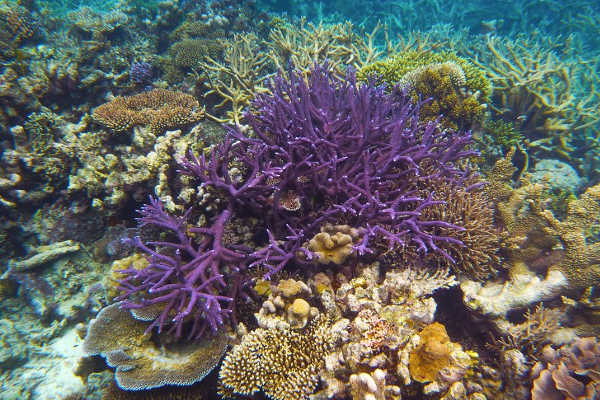
With almost 3,000 individual reefs, 900 islands, and stretching for 2,600km at that place is no denying the reef is massive. This incredible living organisation can even exist viewed from space. If y'all want to get an idea of size, and so imagine the country of Italy lying just off the coast of Commonwealth of australia and yous begin to get an idea of its vastness.
-
two. It is domicile to an incredible diverseness of species
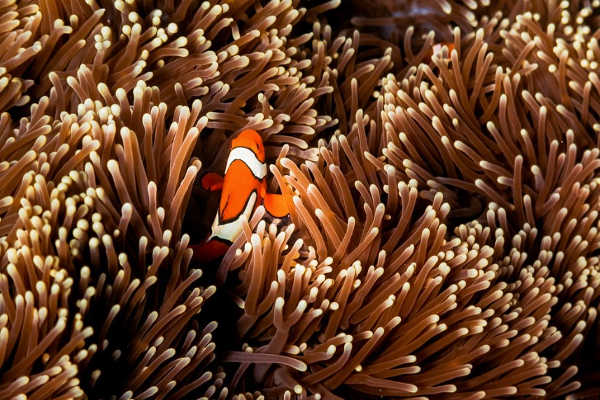
Attempting to list all the species hither would exist a challenge to say the least so here are some of the most impressive groups that the reef is home to:
- 30 species of whale, dolphin, and porpoise
- vi species of turtle
- 17 species of sea snake
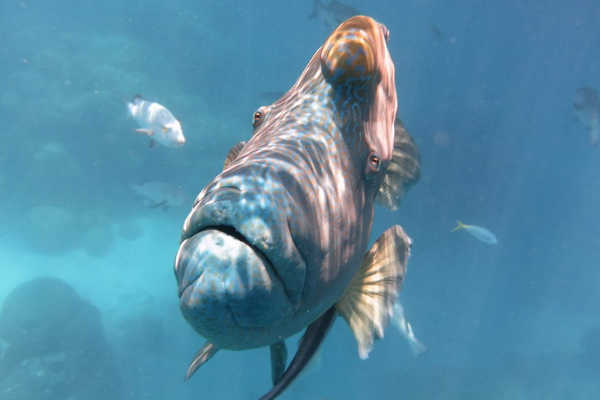
- More than than i,500 species of fish – incredibly, 10% of the world's fish species inhabit the Slap-up Bulwark Reef.
-
3. Corals are alive
Then what is a coral, y'all ask? Corals are formed past tiny creatures chosen polyps that have a sac-similar body with emerging tentacles. Corals gain their stone-like structure from the polyps as they use calcium and carbonate ions from the seawater to create a hard outer skeleton to protect their soft bodies. These polyps survive due to their relationship with the algae that alive alongside them. The algae absorb light from the sun and subsequently feed the coral. The algae also give the corals their bright colours. Corals are, in fact, nocturnal and it is under the cover of darkness that the polyps emerge from their outer casings to grab small creatures that pass by.
-
4. The reef is further out than you may think
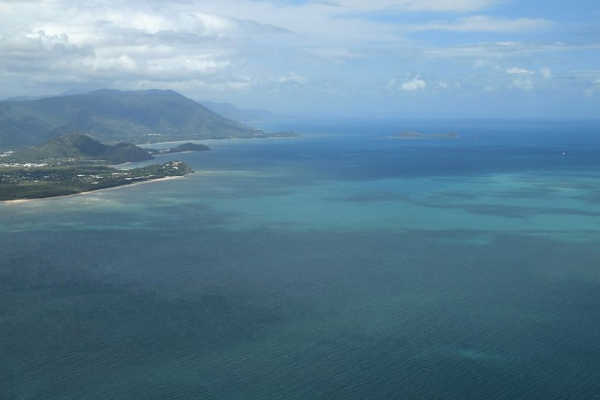
Whilst coral reefs thrive in warm, shallow waters, these are not e'er close to shore. A bulwark reef is defined as a coral reef running parallel to the shore but separated past a large lagoon. Visitors to the reef may exist surprised that their boat trip could have between 45 minutes and two hours to reach the dive site then remember your travel sickness pills if it's a windy day!
-
five. The threats to the reef are numerous
Sadly, the reef is struggling to survive with climate change being the master threat. Rising body of water temperatures and pollution leave the coral more susceptible to bleaching and, tragically, eventual death. Tourism can besides play a role, with swimmers and divers touching and dissentious parts of the reef likewise as leaving behind rubbish and contaminating the waters with sun cream and other pollutants.
-
6. A bleached reef isn't always a dead reef
Coral bleaching occurs when changes in weather condition crusade the polyps to miscarry the algae on which it depends to survive. It is the algae which give the corals their colour then, of class, no algae means a bleached, colourless reef. Not all corals will immediately dice following this event, however they are left without their primary nutrient supply and are therefore more than at risk of starvation and disease. Corals can recover afterwards bleaching providing that conditions return to normal and they are not put under strain too soon afterward.
-
vii. There is hope for the reef's return
Protection of the Great Barrier Reef is a top priority for the Australian Government and conservationists, so you'll exist happy to hear that measures are existence taken to help protect this natural wonder. Efforts are existence made to reduce sediment runoff and advanced laboratory techniques are assuasive resilient corals to be grown away from the reef and planted in the wild when they are prepare. Also, whilst tourism tin play a part in the reef'south problems, it is also a part of the solution. With over two meg visitors a year, the Great Barrier Reef is one of the most popular attractions in Australia and generates $5-6 billion per year. Coin from reef tourism contributes massively to reef protection and the more people that love the reef, the more than will be adamant to assistance it survive.
-
8. The reef is millions of years former!
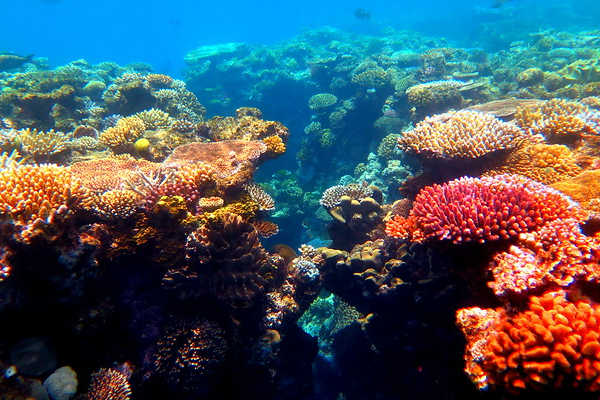
The living corals which form the reef now are sat upon old, expressionless structures. These corals of the past could exist up to 20 1000000 years old!
-
9. Prehistoric creatures still live there
As already mentioned, some of the coral structures could date dorsum millions of years, merely so too could some of the creatures living at that place. The alien-like nautilus is a distant cousin to the squid but what makes this creature unique is that it appears to have remained relatively unchanged over the last 500 million years!
-
10. Corals simply spawn once a year
When conditions are right, often after a full moon, the incredible phenomenon of coral reproduction takes place. An unabridged colony can synchronise, with each polyp releasing its genetic matter into the h2o creating a scene reminiscent of a snowstorm. This outcome tin exit deposits on the surface of the water visible from space! Following this, new corals tin can course. Amazingly, information technology tin take a unmarried polyp to start a new reef!
-
11. Visit in the wintertime
The summer months may seem like a great time to visit the reef. Simply bated from the scorching temperatures, what may put you off a summer visit are the stingers. Stinger flavour stretches from November to May and within this fourth dimension yous could find yourself wearing a stinger adjust in the water or only swimming inside enclosures. But take no fear! Whilst it is cooler in the winter, the air and water temperatures are still pleasant and, most importantly, yous'll avoid a dreaded jellyfish see.
Related article: Meridian five things to practice in the Swell Bulwark Reef
Source: https://greatbarrierreeftourscairns.com.au/blog/11-amazing-facts-about-the-great-barrier-reef/
0 Response to "Off of Which Continent Can You Find the Great Barrier Reef?"
Postar um comentário